Email Marketing Still Works
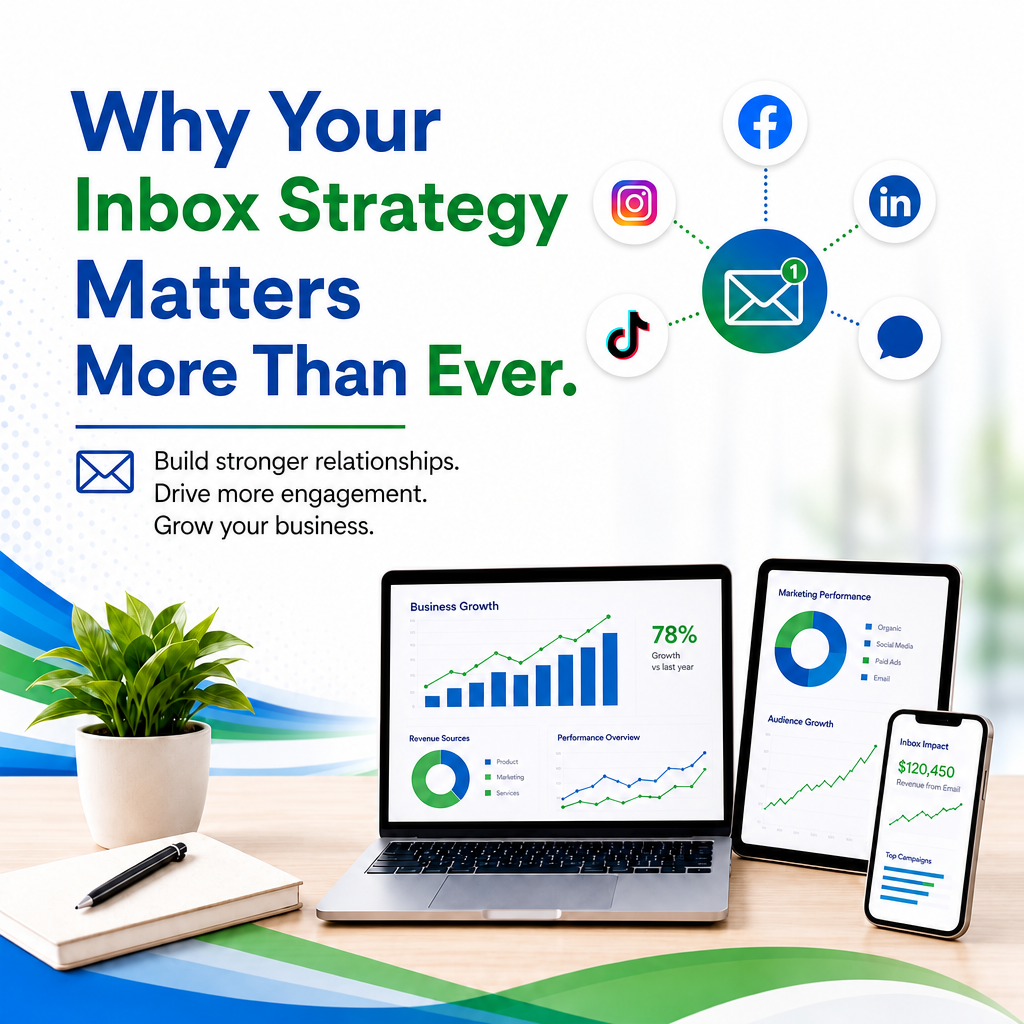
Why Your Inbox Strategy Matters More Than Ever
Sometimes we forget just how powerful a well-written email can be. With social media changing constantly, algorithms determining who sees our posts, and consumers scrolling through hundreds of pieces of content every day, it can be easy to assume that email marketing has become outdated. The truth is, email remains one of the most valuable and measurable marketing tools available to businesses today. While social media is an important part of building visibility and connecting with your audience, email gives you something social media doesn't always provide: a direct line of communication with people who have chosen to hear from you.
Think about how often you scroll through social media and miss posts from businesses you actually follow. You may have followed them because you were interested in what they offer, but that doesn't mean their next post will appear in your feed. Social media platforms use algorithms to determine what content users see, and that reach can change at any time. Email works differently. When someone joins your email list, you have an opportunity to communicate directly with them through their inbox. That doesn't guarantee they will open or read your message, but it gives you a much more direct connection than simply hoping an algorithm puts your post in front of them.
The real power of email marketing, however, isn't simply the ability to send an email. It's the ability to build a relationship and measure what happens as a result of your communication. A good email campaign is about much more than writing something, adding a pretty graphic, and clicking send. Effective email marketing starts with understanding your audience, knowing what they need, providing something valuable, and giving them a clear reason to take the next step.
And before you think this is just another marketer telling you that email marketing works, let's look at the numbers. According to Litmus, email marketing generates an average return of approximately $36 for every $1 spent. Its more recent research also found that many companies report returns ranging from $10 to $36 for every dollar invested, while others report returns of $36 to $50 or even more. Of course, those numbers don't mean every business is automatically going to make $36 for every dollar it spends. Results depend on the industry, audience, offer, list quality, strategy, and execution. What the numbers do show is that email marketing has the potential to produce a significant return when it is done well.
That is why your email list should be viewed as more than a collection of names and email addresses. These are people who have already taken some level of interest in your business. They may be current customers, previous customers, potential customers, members of your community, or people who simply want to learn more about what you offer. Instead of constantly trying to find new people, email gives you an opportunity to continue communicating with people who have already raised their hands and said, in one way or another, “I'm interested.”
This is also where many businesses get email marketing wrong. They treat every email as a sales pitch. If the only time your customers hear from you is when you're trying to sell them something, they are eventually going to stop paying attention. People don't want to feel like they are constantly being sold to. They want information, solutions, education, entertainment, helpful ideas, and reasons to trust your business. Some emails should promote an offer, but others should simply provide value and strengthen the relationship you are building with your audience.
A strong email should also have a purpose. Before you send anything, ask yourself what you want the reader to do after they finish reading. Maybe you want them to visit your website, schedule an appointment, request a quote, download a resource, respond to a question, or make a purchase. Maybe the purpose is simply to educate them about a problem they didn't realize they had. Whatever the goal, knowing that purpose helps you create a more focused message and a stronger call to action.
Another important part of email marketing is understanding the difference between activity and results. For years, marketers have focused heavily on open rates because they provide an easy number to track. While open rates can still provide useful information, they aren't the complete picture. Changes in privacy technology, including Apple's Mail Privacy Protection, have made open-rate data less reliable. That's why businesses should also pay attention to clicks, click-through rates, conversions, inquiries, purchases, and other actions that demonstrate actual engagement.
For example, imagine you send an email to 1,000 people and 400 of them are recorded as opening it. That sounds great, but what happened after they opened it? Did 50 people click through to your website? Did 10 people request information? Did five schedule a consultation? Did three make a purchase? Those numbers tell you much more about whether the email actually contributed to your business goals. Getting someone's attention is only the beginning. The real value comes from what happens next.
Email marketing can also become incredibly powerful when you combine it with automation. Imagine someone visits your website and requests information about one of your services. Instead of relying on someone to remember to follow up several days later, you can create an automated series of emails that begins immediately. The first email might welcome them and provide the information they requested. Another email might answer common questions. A later message could provide helpful information, share a customer experience, and eventually invite them to schedule a consultation or take the next step. The system continues working even while you're busy running your business.
Automation doesn't mean removing the human element from your marketing. In fact, when done correctly, automation can help you maintain the human relationship because it allows you to communicate consistently without having to manually remember every follow-up. For a small business owner who is already wearing ten different hats, that can make a tremendous difference.
Consistency is another major factor. One of the easiest ways to lose the value of an email list is to disappear for months at a time and then suddenly send an email because you have something to sell. Your audience needs to hear from you consistently enough to remember who you are and why they chose to connect with you in the first place. That doesn't necessarily mean sending an email every day. Depending on your business and audience, weekly, biweekly, or monthly communication may be appropriate. What matters is having a plan and sticking with it.
The same principle applies to marketing as a whole. Social media, email, websites, SEO, blogging, and other marketing efforts rarely produce their greatest results when they are treated as one-time activities. Marketing is a process. It requires consistency, testing, measurement, and adjustment. You don't necessarily need to do more marketing; you need to understand whether the marketing you're already doing is actually moving your business forward.
This is where your numbers become extremely valuable. Instead of simply saying, “I think people like my emails,” you can look at the data. You can see which subject lines receive more attention, which emails generate the most clicks, which offers produce inquiries, and which campaigns result in sales. You can identify what your audience responds to and then use that information to improve future campaigns. Data doesn't replace creativity or relationships, but it gives you information that can help you make smarter decisions.
There is also an important connection between email marketing and the rest of your digital marketing strategy. Social media can introduce people to your business, your website can provide more information, and email can help you continue the conversation after someone has expressed interest. Instead of treating each marketing channel as a completely separate activity, you can create a system where they work together. Someone may discover you through Facebook, visit your website, join your email list, receive helpful information, and eventually become a customer. That is the customer journey you want to understand.
Ultimately, the power of email marketing comes down to a simple combination: strategy and consistency. You can have a beautiful email that nobody opens. You can have a huge email list that never converts. You can have thousands of social media followers and still struggle to generate revenue. The goal isn't simply to create more content or send more emails. The goal is to create marketing that helps move people from awareness to interest, from interest to trust, and from trust to action.
So, is email marketing worth it? The data certainly suggests that it can be. With Litmus reporting an average return of approximately $36 for every $1 spent, email remains a channel worth paying attention to. But the bigger opportunity isn't simply the potential return. It's the ability to communicate directly with your audience, build relationships over time, follow up consistently, and measure what happens as a result.
In a world full of scrolls, swipes, disappearing stories, and constantly changing algorithms, email still lands—right in their inbox.
The question isn't whether email marketing can work. The better question is whether you're using it strategically enough to work for your business.
At Fuel Ur Biz, we believe your marketing should do more than make your business look busy. It should help you build visibility, create relationships, generate leads, retain customers, and ultimately grow your business. Whether you need help developing an email strategy, creating campaigns, building automated follow-up, connecting your email marketing with your website and CRM, or simply figuring out what your marketing numbers actually mean, the goal is the same: stop guessing, start measuring, and start growing.
If you're ready to take a closer look at your marketing and discover where you may be leaving opportunities on the table, Fuel Ur Biz can help you build a strategy that works smarter for your business.