The Power of an Automated CRM Program
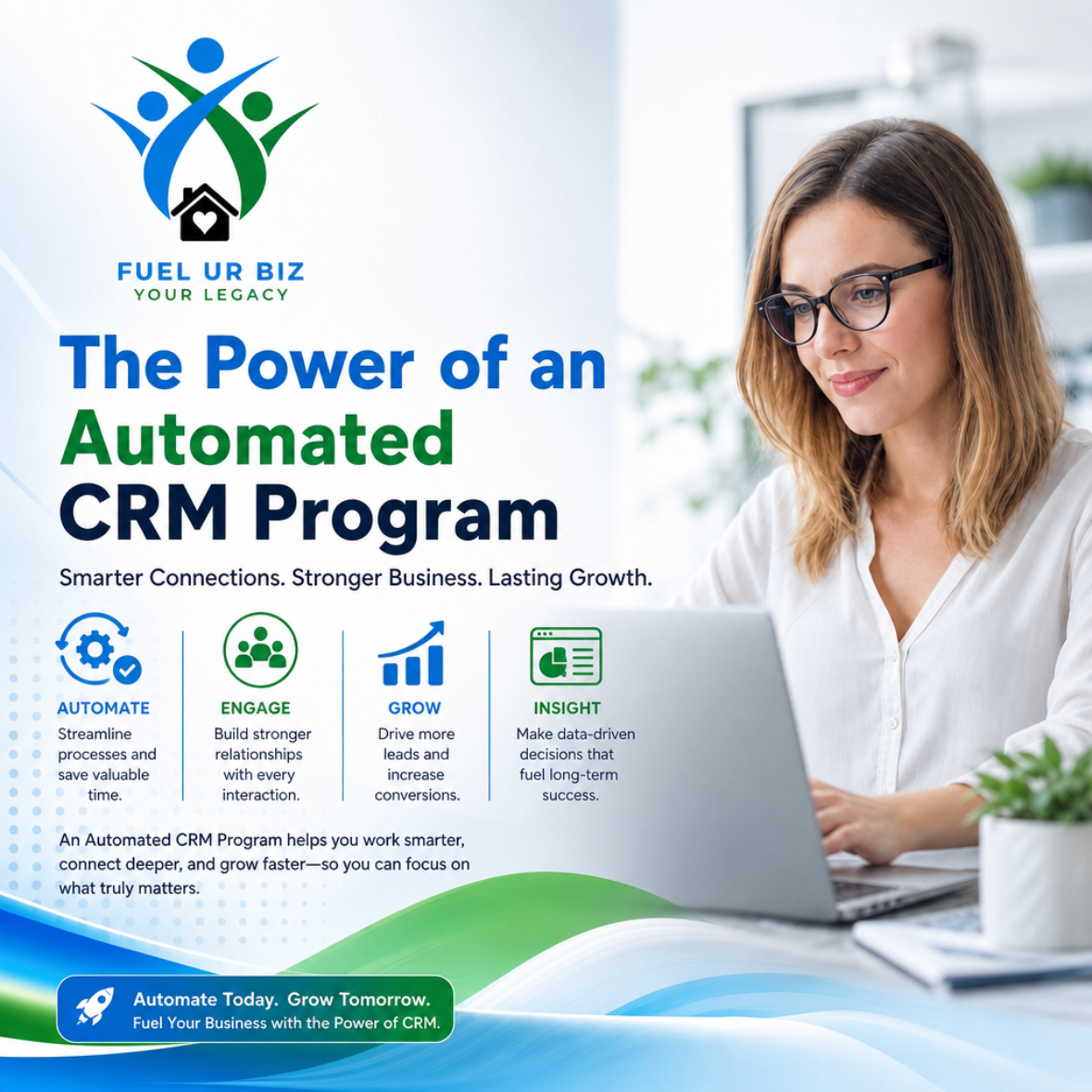
In today’s fast-paced business world, customer relationships are everything. But managing those relationships manually? That’s like trying to catch a river with a bucket — exhausting, inconsistent, and almost impossible at scale.
That’s where an automated CRM (Customer Relationship Management) program comes in — the not-so-secret weapon for sales and customer service teams aiming for next-level results.
Why Automation in CRM Changes the Game
At its core, a CRM is designed to organize, track, and nurture customer relationships. Add automation to the mix, and you supercharge the process.
Tasks that once took hours — following up with leads, sending personalized emails, updating customer records, assigning service tickets — now happen automatically, with consistency and precision.
Imagine freeing up your team from repetitive busywork so they can focus on what they do best: building genuine connections and closing deals.
The Benefits for Sales Teams
1. Lead Management on Autopilot
An automated CRM captures leads from your website, social media, or marketing campaigns and routes them to the right salesperson — instantly. No more digging through spreadsheets or sticky notes. You respond faster, which means you close faster.
2. Personalized Follow-Ups Without the Hassle
An automated system can send personalized emails based on where a lead is in the buying journey. Birthday greetings, appointment reminders, special promotions — all delivered right on time, every time.
3. Smarter Insights for Smarter Selling
With detailed analytics, an automated CRM shows you what’s working — and what’s not. See where leads drop off, what messages convert best, and which sales reps are crushing it. Data doesn’t lie, and automation makes sure you have it at your fingertips.
The Benefits for Customer Service Teams
1. Faster Response Times
An automated CRM can instantly create service tickets, assign them to the right rep, and even send customers real-time updates. Faster resolutions mean happier customers — and happier customers mean better retention.
2. Consistent Customer Experiences
Automation ensures that every customer gets a consistent experience, whether it’s their first call or their fiftieth. No one falls through the cracks, and every touch point feels intentional and professional.
3. Proactive Customer Support
The best service isn’t reactive — it’s proactive. Automated CRMs can trigger follow-ups after a purchase, send satisfaction surveys, or flag accounts that need extra attention before problems arise.
Bonus: The Sales and Service Alignment
When your CRM automates communication between your sales and service teams, magic happens.
Sales can hand off customers to service with a full history of interactions, ensuring smooth transitions and eliminating frustrating “starting over” moments for customers.
Meanwhile, service teams can spot upsell and cross-sell opportunities and feed them back to sales — turning every support call into a potential new deal.
Final Thoughts
An automated CRM isn’t just a tool — it’s a strategy. It’s about giving your teams the ability to work smarter, not harder, while delivering a world-class experience to every customer, every time.
In today’s competitive market, businesses that invest in automation aren’t just keeping up — they’re setting the pace.
The question isn’t if you should automate your CRM.
The question is: How much are you leaving on the table if you don’t?
If you are ready to start your own online biz click —> “Ready”